- English
- Esperanto
- Afrikaans
- Català
- שפה עברית
- Cymraeg
- Galego
- Latviešu
- icelandic
- ייִדיש
- беларускі
- Hrvatski
- Kreyòl ayisyen
- Shqiptar
- Malti
- lugha ya Kiswahili
- አማርኛ
- Bosanski
- Frysk
- ភាសាខ្មែរ
- ქართული
- ગુજરાતી
- Hausa
- Кыргыз тили
- ಕನ್ನಡ
- Corsa
- Kurdî
- മലയാളം
- Maori
- Монгол хэл
- Hmong
- IsiXhosa
- Zulu
- Punjabi
- پښتو
- Chichewa
- Samoa
- Sesotho
- සිංහල
- Gàidhlig
- Cebuano
- Somali
- Тоҷикӣ
- O'zbek
- Hawaiian
- سنڌي
- Shinra
- Հայերեն
- Igbo
- Sundanese
- Lëtzebuergesch
- Malagasy
- Yoruba
- অসমীয়া
- ଓଡିଆ
- Español
- Português
- русский
- Français
- 日本語
- Deutsch
- tiếng Việt
- Italiano
- Nederlands
- ภาษาไทย
- Polski
- 한국어
- Svenska
- magyar
- Malay
- বাংলা ভাষার
- Dansk
- Suomi
- हिन्दी
- Pilipino
- Türkçe
- Gaeilge
- العربية
- Indonesia
- Norsk
- تمل
- český
- ελληνικά
- український
- Javanese
- فارسی
- தமிழ்
- తెలుగు
- नेपाली
- Burmese
- български
- ລາວ
- Latine
- Қазақша
- Euskal
- Azərbaycan
- Slovenský jazyk
- Македонски
- Lietuvos
- Eesti Keel
- Română
- Slovenski
- मराठी
- Srpski језик

Is Your Air Conditioning Contactor Suitable for Hermetic Refrigerant Compressors?
SANTUO ELECTRICAL highlights an often-overlooked component: the Air Conditioning Contactor that directly influences compressor performance, system reliability, and maintenance frequency as cooling systems become more efficient and intelligent, .
Modern air conditioning systems rely on dozens of interconnected electrical and mechanical parts. While compressors often receive most of the attention, the contactor responsible for switching power to the compressor plays an equally important role. In systems using hermetic refrigerant compressors, selecting a compatible contactor can make the difference between stable operation and recurring electrical failures.
Industry professionals are increasingly paying attention to component matching as energy regulations tighten and expectations for equipment reliability continue to rise. A properly selected contactor not only controls electrical flow but also helps support long-term system performance under demanding operating conditions.
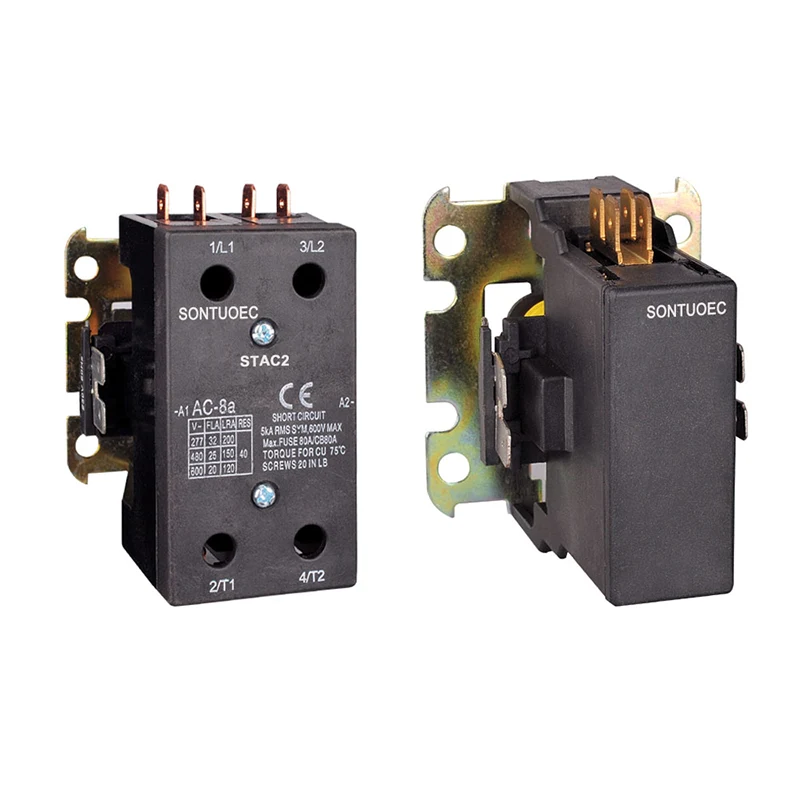
Hermetic Refrigerant Compressors
Hermetic compressors are widely used in residential, commercial, and light industrial cooling applications. Unlike open-type compressors, the motor and compression mechanism are enclosed within a sealed housing.
This sealed design offers several advantages:
- Reduced refrigerant leakage risk
- Lower maintenance requirements
- Improved operational efficiency
- Better protection against contamination
- Compact installation footprint
However, hermetic compressors also present unique electrical challenges. During startup, they often draw significantly higher current than during normal operation. This surge can place substantial stress on switching components.
As a result, the contactor controlling the compressor must be capable of handling both frequent switching cycles and high inrush currents without excessive wear.
Why the Contactor Matters More Than Many People Think
In many cooling systems, the contactor acts as the bridge between the control circuit and the compressor motor.
Whenever the thermostat or control system sends a signal, the contactor responds by energizing its coil, pulling the contacts together, and allowing electrical power to reach the compressor. When the signal ends, the contacts separate and interrupt the circuit.
This process may occur thousands of times throughout the equipment's service life.
If the contactor is not properly matched to the compressor, several issues can arise:
Common Problems Linked to Incorrect Selection
- Contact welding caused by excessive startup current
- Frequent tripping and nuisance shutdowns
- Overheating of electrical components
- Reduced compressor lifespan
- Increased maintenance interventions
- Higher operational costs
Many service technicians discover that recurring compressor issues are actually symptoms of contactor incompatibility rather than compressor defects.
Key Requirements for Hermetic Compressor Applications
Not every contactor is designed to perform equally well in refrigeration and air conditioning environments.
When evaluating suitability, several factors should be examined carefully.
1. Current Carrying Capacity
The contactor should comfortably accommodate both running current and startup current.
Hermetic compressors can generate startup currents several times higher than normal operating currents. A device selected only according to running current may experience premature wear.
2. Contact Material Quality
The durability of the contact system directly affects switching performance.
High-quality contact materials help:
- Reduce arcing
- Minimize contact erosion
- Improve electrical conductivity
- Extend operational life
3. Coil Stability
Voltage fluctuations remain common in many installations.
A reliable Air Conditioning Contactor should maintain stable operation across normal voltage variations while avoiding unwanted chatter or incomplete contact closure.
4. Arc Suppression Capability
Whenever contacts open under load, electrical arcs are generated.
Effective arc extinguishing systems help protect internal components and reduce long-term degradation.
5. Switching Frequency
Some cooling systems cycle frequently, particularly in environments with fluctuating temperatures.
The contactor should be capable of handling repeated operations without significant performance decline.
Quick Evaluation Checklist
The following table provides a practical reference when assessing contactor suitability for hermetic compressor systems.
| Evaluation Factor | Why It Matters | Potential Risk if Ignored |
| Rated Current | Supports compressor load | Overheating and contact damage |
| Starting Current Capacity | Handles motor inrush current | Contact welding |
| Coil Voltage Matching | Ensures proper operation | Unstable switching |
| Arc Extinguishing Design | Reduces electrical wear | Shortened service life |
| Contact Material | Maintains conductivity | Increased resistance |
| Mechanical Durability | Supports frequent cycling | Premature failure |
| Installation Environment | Addresses temperature and dust conditions | Reliability issues |
Industry Trends Driving Better Component Selection
Cooling technology has evolved significantly over the past decade.
Several developments are changing expectations for contactor performance:
Smart Building Integration
Building management systems increasingly automate HVAC operation.
More frequent control signals can increase switching cycles, making component durability even more important.
Energy Efficiency Targets
Governments and facility operators continue seeking lower energy consumption.
Stable electrical switching helps maintain compressor efficiency and minimize unnecessary power losses.
Increased Use of Variable Cooling Loads
Modern facilities rarely operate under constant conditions.
Changing occupancy levels, weather patterns, and production demands require electrical components capable of adapting to varying operating conditions.
Longer Service Expectations
Equipment owners increasingly expect cooling systems to operate reliably for extended periods with minimal maintenance interruptions.
This trend places greater emphasis on component quality and compatibility.
Signs Your Existing Contactor May Not Be Suitable
Some warning indicators appear long before complete failure occurs.
Technicians often recommend inspections when any of the following symptoms appear:
Unusual Noise
Buzzing or chattering sounds may indicate coil instability or voltage-related issues.
Excessive Heat
Abnormally high temperatures around the contactor can signal overload conditions or contact degradation.
Visible Contact Wear
Pitting, discoloration, or erosion may indicate excessive arcing.
Intermittent Compressor Operation
Unexpected shutdowns or inconsistent startup performance can sometimes be traced to deteriorating contact systems.
Frequent Service Calls
Repeated troubleshooting of compressor-related electrical faults may justify a complete compatibility review.
The Role of Reliability in Modern HVAC Systems
Reliability is no longer simply a maintenance concern.
For commercial buildings, industrial facilities, hotels, healthcare environments, and data-sensitive operations, cooling interruptions can create operational challenges and unexpected costs.
A dependable Air Conditioning Contactor contributes to:
- Stable compressor operation
- Improved equipment uptime
- Reduced maintenance requirements
- Enhanced system safety
- Consistent cooling performance
Although it represents only a small portion of the overall system, its influence on day-to-day operation is substantial.
Choosing Components with Long-Term Performance in Mind
Industry experts generally recommend evaluating the entire operating environment rather than focusing solely on initial specifications.
Questions worth considering include:
- How often does the compressor cycle?
- What are the typical ambient temperatures?
- Are voltage fluctuations common?
- Is remote monitoring or automation involved?
- What maintenance intervals are expected?
Answering these questions helps ensure the selected contactor aligns with actual operating conditions rather than theoretical requirements alone.
Looking Beyond Basic Specifications
Modern electrical control components increasingly incorporate improvements in contact design, electromagnetic systems, insulation materials, and arc management technologies.
These advancements help address many of the challenges associated with hermetic compressor applications while supporting higher reliability and longer operational life.
Hermetic refrigerant compressors place unique demands on electrical switching devices. Evaluating startup current handling, contact durability, coil stability, and arc suppression capability can help determine whether a contactor is truly suited to the application. As cooling systems become more intelligent and reliability expectations continue to rise, careful component matching remains an essential part of successful HVAC system design. For professionals reviewing compressor control solutions, the Air Conditioning Contactor remains a critical component worth close attention, supported by the industry experience of WENZHOU SANTUO ELECTRICAL CO., LTD.